a class that will hold a single dataset and its properties for a Plot3D plot More...
#include <gtkmm-plplot/plotdata3d.h>
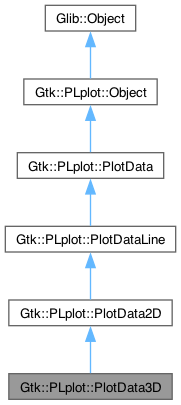
Public Member Functions | |
| PlotData3D (const std::vector< double > &x, const std::vector< double > &y, const std::vector< double > &z, Gdk::RGBA color=Gdk::RGBA("red"), LineStyle line_style=CONTINUOUS, double line_width=PLOTDATA_DEFAULT_LINE_WIDTH) | |
| PlotData3D (const std::valarray< double > &x, const std::valarray< double > &y, const std::valarray< double > &z, Gdk::RGBA color=Gdk::RGBA("red"), LineStyle line_style=CONTINUOUS, double line_width=PLOTDATA_DEFAULT_LINE_WIDTH) | |
| virtual | ~PlotData3D () |
| std::vector< double > | get_vector_z () |
| virtual void | add_datapoint (double xval, double yval, double zval) |
| virtual void | add_datapoint (std::tuple< double, double, double > xyz_tuple) |
| virtual void | remove_datapoint (size_t index) override |
| virtual void | replace_datapoints (const std::vector< double > &x, const std::vector< double > &y, const std::vector< double > &z) |
| virtual void | replace_datapoints (const std::valarray< double > &x, const std::valarray< double > &y, const std::valarray< double > &z) |
| virtual void | draw_plot_data (const Cairo::RefPtr< Cairo::Context > &cr, plstream *pls) override |
 Public Member Functions inherited from Gtk::PLplot::PlotData2D Public Member Functions inherited from Gtk::PLplot::PlotData2D | |
| PlotData2D (const std::vector< double > &x, const std::vector< double > &y, Gdk::RGBA color=Gdk::RGBA("red"), LineStyle line_style=CONTINUOUS, double line_width=PLOTDATA_DEFAULT_LINE_WIDTH) | |
| PlotData2D (const std::valarray< double > &x, const std::valarray< double > &y, Gdk::RGBA color=Gdk::RGBA("red"), LineStyle line_style=CONTINUOUS, double line_width=PLOTDATA_DEFAULT_LINE_WIDTH) | |
| PlotData2D (const std::vector< double > &y, Gdk::RGBA color=Gdk::RGBA("red"), LineStyle line_style=CONTINUOUS, double line_width=PLOTDATA_DEFAULT_LINE_WIDTH) | |
| PlotData2D (const std::valarray< double > &y, Gdk::RGBA color=Gdk::RGBA("red"), LineStyle line_style=CONTINUOUS, double line_width=PLOTDATA_DEFAULT_LINE_WIDTH) | |
| virtual | ~PlotData2D () |
| std::vector< double > | get_vector_x () |
| std::vector< double > | get_vector_y () |
| size_t | size () |
| virtual void | get_extremes (double &xmin, double &xmax, double &ymin, double &ymax) |
| void | set_symbol (Glib::ustring symbol) |
| Glib::ustring | get_symbol () |
| void | set_symbol_color (Gdk::RGBA color) |
| Gdk::RGBA | get_symbol_color () |
| void | set_symbol_height_scale_factor (double scale_factor=1.0) |
| double | get_symbol_height_scale_factor () |
| Public Member Functions inherited from Gtk::PLplot::PlotDataLine | |
| virtual | ~PlotDataLine () |
| void | set_color (Gdk::RGBA color) |
| Gdk::RGBA | get_color () |
| void | set_line_style (LineStyle line_style) |
| LineStyle | get_line_style () |
| void | set_line_width (double line_width) |
| double | get_line_width () |
| Public Member Functions inherited from Gtk::PLplot::PlotData | |
| virtual | ~PlotData () |
| void | set_name (Glib::ustring name) |
| Glib::ustring | get_name () |
| void | show () |
| void | hide () |
| bool | is_showing () const |
| sigc::signal< void(void)> | signal_changed () |
| sigc::signal< void(void)> | signal_data_modified () |
| Public Member Functions inherited from Gtk::PLplot::Object | |
| virtual void | set_manage () |
Protected Attributes | |
| std::vector< double > | z |
| The Z-values of the dataset. | |
| Protected Attributes inherited from Gtk::PLplot::PlotData2D | |
| std::vector< double > | x |
| The X-values of the dataset. | |
| std::vector< double > | y |
| The Y-values of the dataset. | |
| Glib::ustring | symbol |
If not an empty string, the symbol will be plotted at each of the data points from x and y. | |
| Gdk::RGBA | symbol_color |
| The color the symbol will be plotted in. | |
| double | symbol_scale_factor |
| Scale factor that will determine the size of the symbols. Default is 1. | |
| Protected Attributes inherited from Gtk::PLplot::PlotDataLine | |
| Gdk::RGBA | color |
| The color the dataset will be drawn in. | |
| LineStyle | line_style |
| The linestyle that will be used for this dataset in the plot. | |
| double | line_width |
| The line width of the dataset. Default is 1.0. | |
| Protected Attributes inherited from Gtk::PLplot::PlotData | |
| sigc::signal< void(void)> | _signal_changed |
| signal that gets emitted whenever any of the dataset proprties is changed. | |
| sigc::signal< void(void)> | _signal_data_modified |
| signal that gets emitted whenever the X- and Y-datasets have been modified. | |
Private Member Functions | |
| PlotData3D ()=delete | |
| no default constructor | |
| PlotData3D (const PlotData3D &)=delete | |
| no copy constructor | |
| PlotData3D & | operator= (const PlotData3D &)=delete |
| no assignment operator | |
| virtual void | add_datapoint (double xval, double yval) final |
| virtual void | add_datapoint (std::pair< double, double > xy_pair) final |
| virtual void | replace_datapoints (const std::vector< double > &x, const std::vector< double > &y) override |
| virtual void | replace_datapoints (const std::valarray< double > &x, const std::valarray< double > &y) override |
Additional Inherited Members | |
| Protected Member Functions inherited from Gtk::PLplot::PlotDataLine | |
| PlotDataLine (Gdk::RGBA color, LineStyle line_style, double line_width) | |
| Protected Member Functions inherited from Gtk::PLplot::PlotData | |
| virtual void | on_changed () |
| virtual void | on_data_modified () |
| PlotData () | |
| Protected Member Functions inherited from Gtk::PLplot::Object | |
| Object () | |
Detailed Description
a class that will hold a single dataset and its properties for a Plot3D plot
Instances of this class contain a single dataset for a Plot3D three-dimensional plot, consisting of the raw X-, Y- and Z-data, along with a number of properties that will determine the appearance of the plot. Data may be represented as a line, symbols or both. The constructors of this class allow to use either std::vector or std::valarray as sources of data, for added flexibility. Internally they are stored only as std::vector though. Important is that whenever a property is changed, signal_changed() is emitted, which will eventually be picked up by the canvas that will hold the plot. Several of the methods that are offered by this class are demonstrated in Example 9: a Three-dimensional plot.
Constructor & Destructor Documentation
◆ PlotData3D() [1/4]
|
privatedelete |
no default constructor
◆ PlotData3D() [2/4]
|
privatedelete |
no copy constructor
◆ PlotData3D() [3/4]
| Gtk::PLplot::PlotData3D::PlotData3D | ( | const std::vector< double > & | x, |
| const std::vector< double > & | y, | ||
| const std::vector< double > & | z, | ||
| Gdk::RGBA | color = Gdk::RGBA("red"), |
||
| LineStyle | line_style = CONTINUOUS, |
||
| double | line_width = PLOTDATA_DEFAULT_LINE_WIDTH |
||
| ) |
Constructor
This constructor initializes a new dataset using two vectors, one for the X-values, and one for the Y-values. Optionally, one can also use the constructor to override the default color, line style and line width.
- Parameters
-
x the X-values, as std::vector y the Y-values, as std::vector z the Z-values, as std::vector color the line color, default is red line_style the line style, default is CONTINUOUS line_width the line width, default is 1.0
- Exceptions
-
Gtk::PLplot::Exception
◆ PlotData3D() [4/4]
| Gtk::PLplot::PlotData3D::PlotData3D | ( | const std::valarray< double > & | x, |
| const std::valarray< double > & | y, | ||
| const std::valarray< double > & | z, | ||
| Gdk::RGBA | color = Gdk::RGBA("red"), |
||
| LineStyle | line_style = CONTINUOUS, |
||
| double | line_width = PLOTDATA_DEFAULT_LINE_WIDTH |
||
| ) |
Constructor
This constructor initializes a new dataset using two valarrays, one for the X-values, and one for the Y-values. Optionally, one can also use the constructor to override the default color, line style and line width.
- Parameters
-
x the X-values, as std::valarray y the Y-values, as std::valarray z the Z-values, as std::valarray color the line color, default is red line_style the line style, default is CONTINUOUS line_width the line width, default is 1.0
◆ ~PlotData3D()
|
virtual |
Destructor
Member Function Documentation
◆ add_datapoint() [1/4]
|
finalprivatevirtual |
Add a single datapoint, consisting of an xval and yval value, to the dataset
This datapoint will be added at the end of the std::vector's x and y. After this method is called, the plot will be automatically updated to reflect the changes. Do not use this method for PlotData3D objects, an exception will be thrown!
- Parameters
-
xval an X-value yval an Y-value
- Exceptions
-
Gtk::PLplot::Exception
Reimplemented from Gtk::PLplot::PlotData2D.
◆ add_datapoint() [2/4]
|
virtual |
Add a single datapoint, consisting of an xval, yval and zval value, to the dataset
This datapoint will be added at the end of the std::vector's x, y and z. After this method is called, the plot will be automatically updated to reflect the changes.
- Parameters
-
xval an X-value yval an Y-value zval an Z-value
◆ add_datapoint() [3/4]
|
finalprivatevirtual |
Add a single datapoint, consisting of a std::pair with an X and Y value, to the dataset
This datapoint will be added at the end of the std::vector's x and y. After this method is called, the plot will be automatically updated to reflect the changes. Do not use this method for PlotData3D objects, an exception will be thrown!
- Parameters
-
xy_pair a std::pair containing both an X- and a Y- value
- Exceptions
-
Gtk::PLplot::Exception
Reimplemented from Gtk::PLplot::PlotData2D.
◆ add_datapoint() [4/4]
|
virtual |
Add a single datapoint, consisting of a std::tuple with an X, Y and Z value, to the dataset
This datapoint will be added at the end of the std::vector's x, y and z. After this method is called, the plot will be automatically updated to reflect the changes.
- Parameters
-
xyz_tuple a std::tuple containing 3 elements (X, Y and Z).
◆ draw_plot_data()
|
overridevirtual |
Method to draw the dataset
This method is virtual allowing inheriting classes to implement their own method with the same signature.
- Parameters
-
cr the cairo context to draw to. pls the PLplot plstream object that will do the actual plotting on the Cairo context
Reimplemented from Gtk::PLplot::PlotData2D.
◆ get_vector_z()
| std::vector< double > Gtk::PLplot::PlotData3D::get_vector_z | ( | ) |
- Returns
- a copy of the dataset Z-values
◆ operator=()
|
privatedelete |
no assignment operator
◆ remove_datapoint()
|
overridevirtual |
Removes a single datapoint from the dataset.
The datapoint at position index will be removed from the dataset if index is valid. An exception will be thrown otherwise. After this method is called, the plot will be automatically updated to reflect the changes.
- Parameters
-
index The current position of the datapoint in the dataset.
- Exceptions
-
Gtk::PLplot::Exception
Reimplemented from Gtk::PLplot::PlotData2D.
◆ replace_datapoints() [1/4]
|
overrideprivatevirtual |
Replaces all datapoints in the dataset with the new valarrays
This method assumes that x and y are valarrays of equal length. An exception will be thrown otherwise. After this method is called, the plot will be automatically updated to reflect the changes. Do not use this method for PlotData3D objects, an exception will be thrown!
- Parameters
-
x The new X-values, as std::valarray<double> y The new Y-values, as std::valarray<double>
- Exceptions
-
Gtk::PLplot::Exception
Reimplemented from Gtk::PLplot::PlotData2D.
◆ replace_datapoints() [2/4]
|
virtual |
Replaces all datapoints in the dataset with the new valarrays
This method assumes that x, y and z are valarrays of equal length. An exception will be thrown otherwise. After this method is called, the plot will be automatically updated to reflect the changes.
- Parameters
-
x The new X-values, as std::valarray<double> y The new Y-values, as std::valarray<double> z The new Z-values, as std::valarray<double>
- Exceptions
-
Gtk::PLplot::Exception
◆ replace_datapoints() [3/4]
|
overrideprivatevirtual |
Replaces all datapoints in the dataset with the new vectors
This method assumes that x and y are vectors of equal length. An exception will be thrown otherwise. After this method is called, the plot will be automatically updated to reflect the changes. Do not use this method for PlotData3D objects, an exception will be thrown!
- Parameters
-
x The new X-values, as std::vector<double> y The new Y-values, as std::vector<double>
- Exceptions
-
Gtk::PLplot::Exception
Reimplemented from Gtk::PLplot::PlotData2D.
◆ replace_datapoints() [4/4]
|
virtual |
Replaces all datapoints in the dataset with the new vectors
This method assumes that x, y and z are vectors of equal length. An exception will be thrown otherwise. After this method is called, the plot will be automatically updated to reflect the changes.
- Parameters
-
x The new X-values, as std::vector<double> y The new Y-values, as std::vector<double> z The new Z-values, as std::vector<double>
- Exceptions
-
Gtk::PLplot::Exception
Member Data Documentation
◆ z
|
protected |
The Z-values of the dataset.